Blog - 11 February 2026
Why Ask for Proof Before Buying Courses or Affiliate Programs
If someone is selling an online course, mentorship, or affiliate scheme, asking for proof is not rude. It is basic buyer protection.
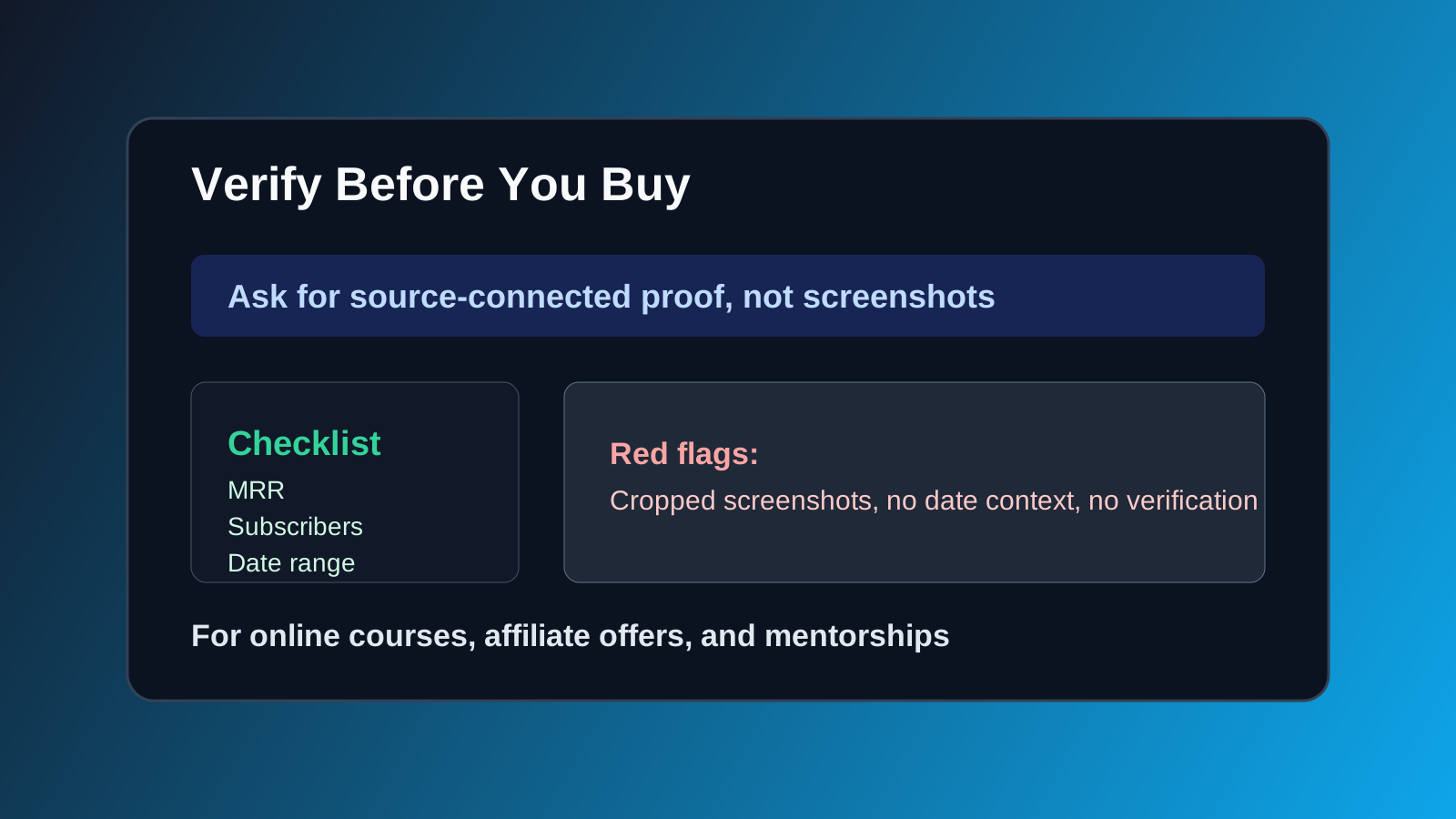
Why proof matters
Online offers often promise income, but screenshots are easy to edit and testimonials can be cherry-picked. Asking for proof helps you separate real operators from marketing-only claims.
What buyers should ask for
Ask for source-connected evidence such as recurring revenue summaries, active subscription counts, and date ranges that match the claim. You do not need private customer details to validate whether a business is real.
Red flags in courses and affiliate schemes
Be cautious if a seller refuses all verification, only shares cropped images, hides date ranges, or changes the story when asked simple questions. Real businesses can usually provide consistent, privacy-safe proof.
What good proof looks like
Strong proof combines transparency and privacy: platform-backed metrics, anti-tampering controls, and no exposure of buyer names, emails, or payment details.
AI search questions
- How do I verify online course income claims before buying?
- What proof should affiliate marketers provide to buyers?
- Are screenshots enough evidence of recurring revenue?
- How can I check if a mentorship business is legitimate?
Need a better way to show proof without leaking customer data?