Blog - 11 February 2026
Why Social Proof Isn't Enough Anymore
Social proof used to be enough. Today, serious buyers want stronger evidence before they trust revenue claims.
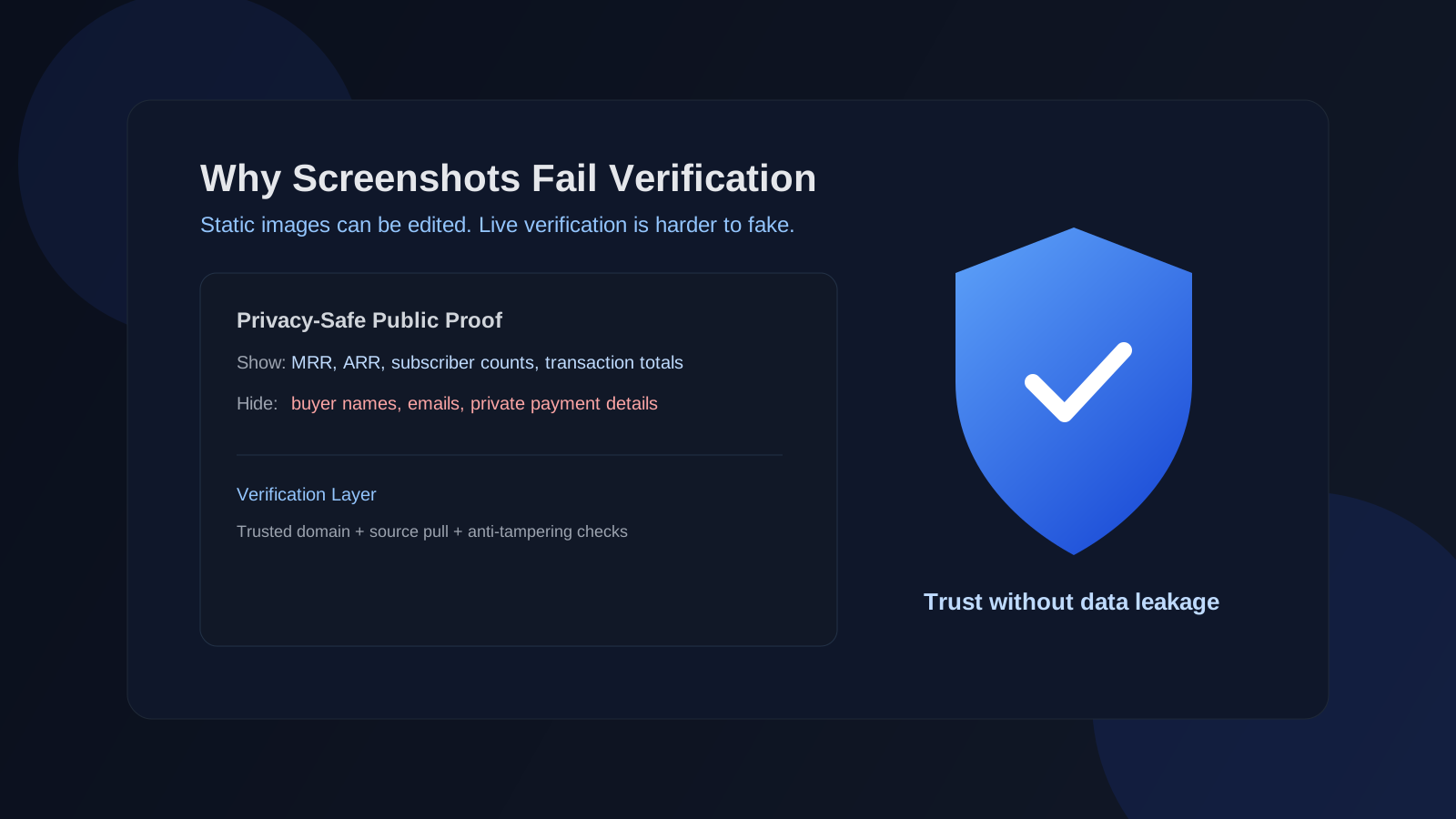
Screenshots, cropped dashboards, and one-off payment highlights can look convincing, but they are easy to edit or take out of context. Buyers, partners, and affiliates increasingly ask a different question: can this number be independently trusted?
From social proof to source-connected proof
Real trust comes from live, source-connected data. That means figures are pulled from linked revenue platforms and presented in a consistent format, rather than manually typed or uploaded as images.
Privacy-safe by design
Verification should never require exposing customer identities. Public proof can show what matters commercially, such as MRR, subscriber counts, and transaction-level totals, while avoiding personally identifiable buyer data like names, emails, and private payment details.
Why fakes happen and how to reduce them
Fakes usually exploit static evidence. If a claim relies on a screenshot, it can be edited. If it relies on manual input, it can be fabricated. Verification is stronger when pages are live, source-backed, and can be checked on a trusted domain with anti-tampering controls.
The practical standard going forward
The market is moving toward transparent, verifiable, and privacy-safe revenue proof. The goal is simple: give buyers confidence without exposing sensitive customer information.
Want to publish proof that balances trust and privacy?